Talweg
· Talweg AI · Agentic AI · 4 min read
What "Practical" Agentic AI Actually Means for Enterprise Data
Moving past the hype of chatbots to autonomous, stream-driven data agents.
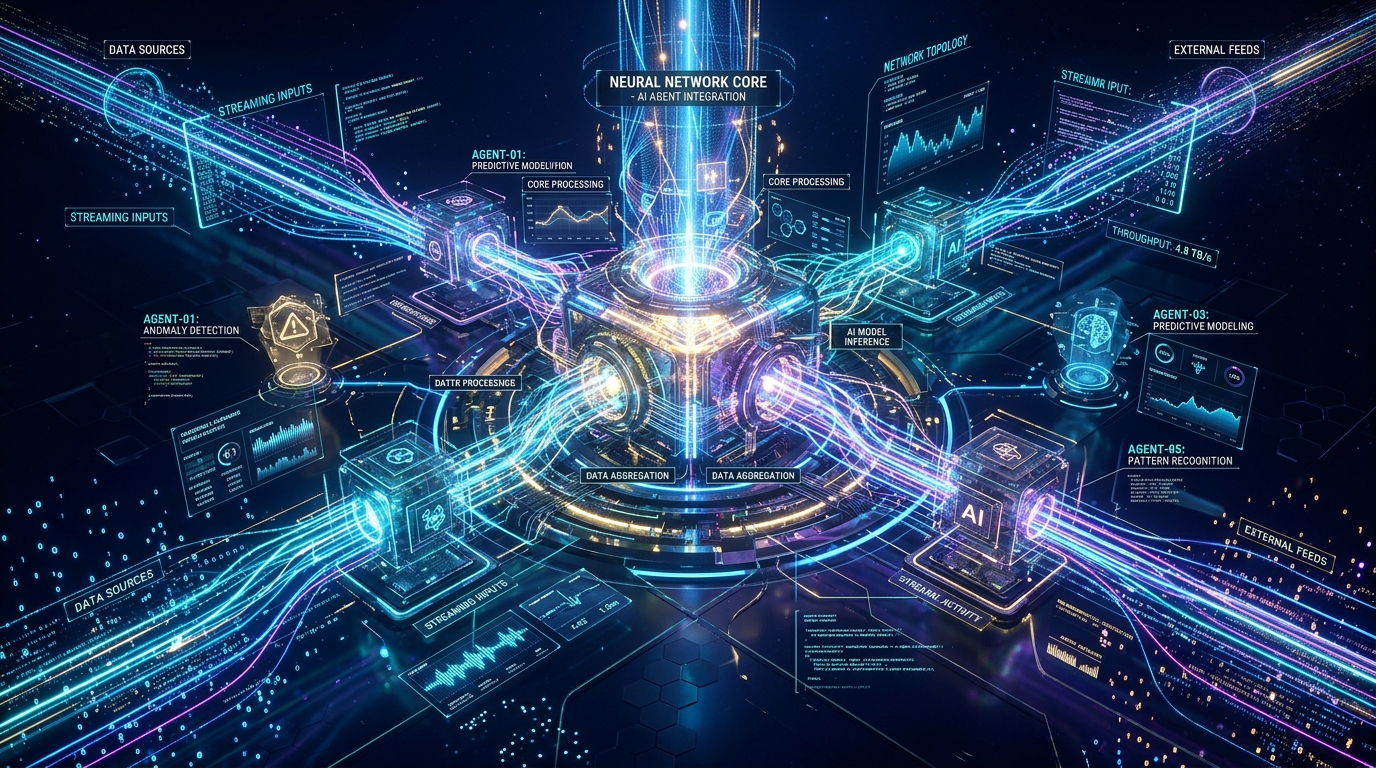
There is a lot of buzz around “Agentic AI” right now. A quick scroll through any tech feed will yield dozens of examples of AI agents planning vacations, writing code, or acting as highly intelligent chatbots. But for enterprise data teams—Data Engineers, Platform Architects, and system administrators—these consumer-focused use cases don’t solve core infrastructure problems.
What does it actually mean to bring Agentic AI to rigid, high-throughput enterprise data pipelines?
Practical Agentic AI in the enterprise isn’t about conversational interfaces. It’s about autonomous agents securely interacting with real-time data streams to make localized decisions, fix pipelines, or trigger downstream workflows without human intervention.
Redefining “Agentic” for Data Engineering
To understand its value in data engineering, we have to move away from the idea of a “human-in-the-loop asking questions to a dashboard.” We are entering the era of the “agent-in-the-loop reacting to event streams.”
A truly functional Data Agent requires three key components:
- Perception: The ability to consume high-velocity event streams in real-time.
- Reasoning: Using Large Language Models (LLMs) to evaluate complex, ambiguous conditions that rigid, rule-based systems struggle with (e.g., fuzzy matching, sentiment analysis, anomaly context).
- Action: The ability to trigger APIs, route data, or alert systems based on its reasoning.
Real-World, Practical Use Cases
Let’s look at what this means in practice when applied to stream processing.
The Autonomous Data Quality Agent
Scenario: A stream processing job detects a sudden spike in malformed JSON payloads coming from an upstream service.
The Agentic Solution: In a traditional setup, this fires a PagerDuty alert, waking up an engineer. An Agentic system handles this differently. The agent analyzes the schema drift, checks recent upstream code commits to understand why the drift occurred, and autonomously applies a transformation fix in Flinkflow to bridge the gap. If it cannot safely fix the issue, it writes a highly contextual ticket for the engineer, complete with the failing payloads and root cause analysis.
Intelligent Customer Intervention
Scenario: A high-value customer repeatedly fails a checkout process.
The Agentic Solution: The event stream (e.g., cart abandonments, payment gateway errors) triggers an agent. Instead of waiting for a batch process to send an email the next day, the agent reviews the customer’s session history instantly. It categorizes the specific friction point and autonomously emails the customer a targeted workaround, or routes their session to a priority human support queue with full context, preventing churn in real-time.
Dynamic Stream Routing
Scenario: An e-commerce platform experiences a massive, unexpected traffic spike, threatening to overwhelm the analytics cluster and spike cloud costs.
The Agentic Solution: An agent monitors stream throughput and cloud infrastructure costs in real-time. When it detects an anomaly that threatens system stability or budgets, it autonomously decides to route lower-priority telemetry data to cold storage instead of the real-time analytics engine until the spike subsides.
Why Real-Time Streaming is the Missing Link
Applying Agentic AI to batch data in data warehouses is like driving while looking in the rearview mirror. To take meaningful, autonomous action, an agent needs to know what is happening right now.
This is why stream processing engines like Apache Flink are the ideal nervous system for enterprise AI agents. They provide the necessary state management, time windowing, and exactly-once processing guarantees required to feed reliable data to agents.
However, integrating high-performance streams with AI agent endpoints has historically required writing thousands of lines of fragile integration code.
This is where Flinkflow comes in. As the declarative, low-code data streaming platform built natively for Apache Flink 2.2.0, Flinkflow makes it easy to bridge the gap. With Flinkflow, you can declaratively wire event streams directly into your AI agents, allowing you to build the foundation for practical, autonomous data operations today.
Ready to see Flinkflow in action? Request a Demo or Read the Documentation to learn how you can start building autonomous data pipelines.